ISA-CERTIFIED ARBORISTS • SERVING GREATER SEATTLE
Tree Removal Service
Safe, efficient removal of hazardous, dead & unwanted trees by ISA-certified arborists across Greater Seattle.
✓ Licensed, Insured & Bonded ✓ ISA-Certified ✓ 24/7 Emergency
- Est. 2010Serving the Puget Sound
- ISA CertifiedArborists on staff
- Licensed, Insured & BondedWA #SOUNDPL826DZ
- 4.7 out of 5517 reviews across 3 sites
- 24/7Emergency response
Professional Tree Removal Service in The Pacific NW
Get tree removal service in Seattle and surrounding areas of the Pacific Northwest. We have been removing trees safely and efficiently in Washington State for a number of years. Every tree that you have on your property will either be an asset or a liability. Through the help of our certified arborists, we will provide a professional assessment of the trees which will allow us to identify any problems with the trees, whether it can be restored and need to be removed right away.
Reputable and Experienced Tree Removal
Our crews will work in a professionally without compromising your safety. Tree removal is a dangerous task and a small mistake may end up being quite costly which is why you should only allow reputable and experienced companies to handle all tree removals. Our promise to you is that we will do our utmost best on every single project.
Superior Tree Removal Service in Seattle
Devoted Tree Solutions strives to provide top-notch tree removal services throughout the beautiful Pacific Northwest. Your safety is our priority and happy to be working with you to make our environment better and safer place. Call us today for your free consultation and tree assessment. We will promise to treat your property as if it were our own, putting your interest first and striving to offer you the best tree service.
Expert Tree Removal that Washington State Trusts
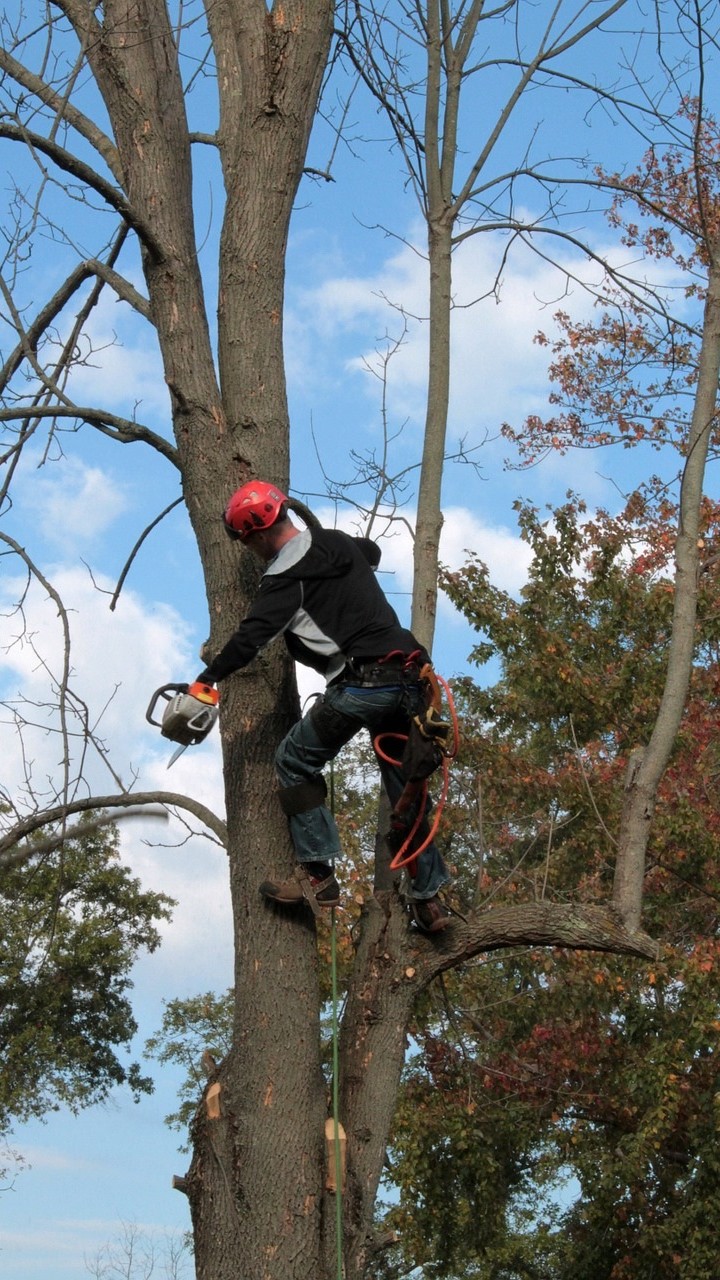
At Devoted Tree Solutions, we are committed to offering the best tree service to our communities. There are many tree service providers that you will come across, but what set us apart is our genuine interest in making your property a safe place for you and your family. Whether you need to remove hazardous, diseased, dead or to clear obstruction, you can depend on the professionals at Devoted Tree Solutions to advise you on what the right and safe options are.
A Skilled and Qualified Arborist Will Examine and Evaluate Your Trees
We will have our skilled and qualified arborists examine and evaluate your trees. This is to try and find an alternative solution before settling for the removal. We will be quick to remove any trees that pose a threat to you, your loved ones and property. If the tree cannot be salvaged, then our experienced crews will remove it safely and professionally.
Why Removal is Necessary
Certainly, if we were to have it our way, we would allow the trees to grow for years and years. However, there are a number of reasons when tree removal becomes necessary.
– Dead or dying trees: these are a hazard for you and your property. The only way to prevent a bad situation would be to remove the tree.
– Diseased trees: These should be handled with immediate attention to prevent further spread of disease. If you have a tree that is growing too close to buildings or power lines, you can avert the disaster through tree removal.
No matter what the situation is, you should not attempt DIY tree removal as this may end up being very costly. We will gladly partner with you to offer professional and safe tree removal.
How a Removal Actually Happens
Almost nobody fells a tree in one piece in a Puget Sound yard. There is rarely room. What actually happens is one of three methods, and which one your tree needs is most of what decides the price.
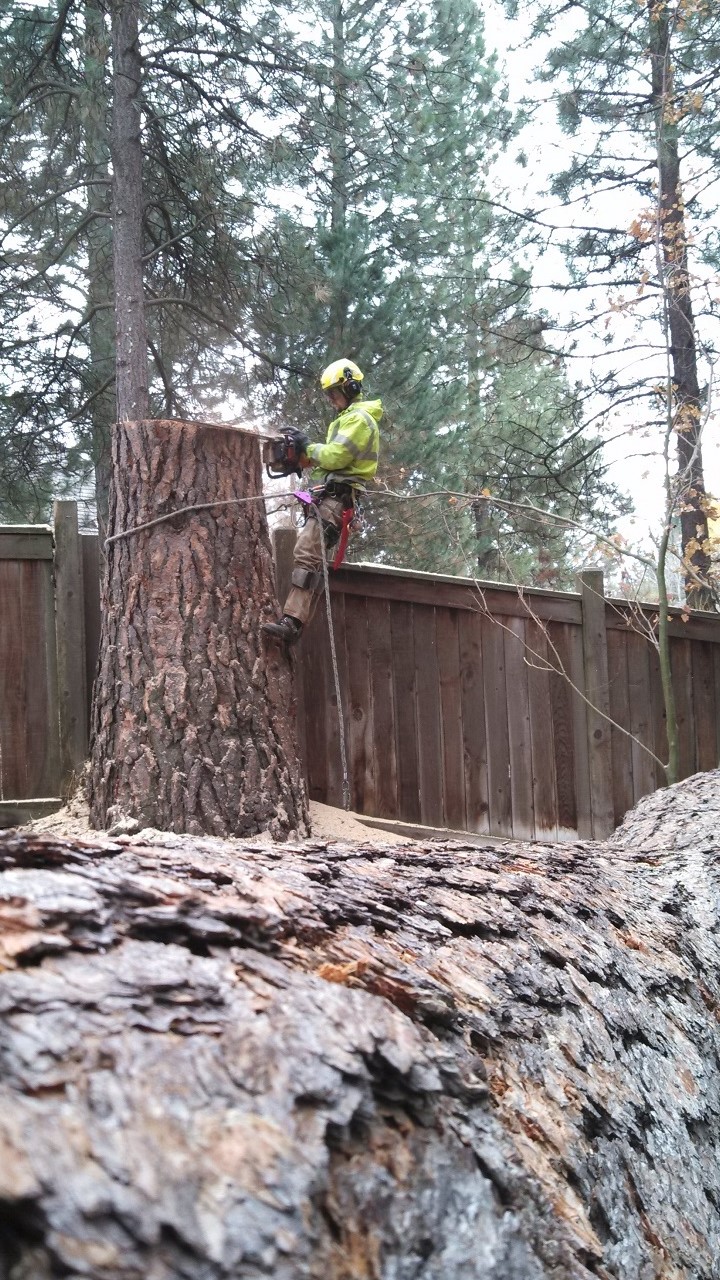
- Climbing and rigging — a climber ascends on rope and saddle and takes the tree down in sections, lowering each piece on rigging lines. This is the method for back gardens, side yards and anywhere a machine cannot reach. Slowest, most skilled, and the only option on a lot of properties.
- Bucket truck — faster and easier on the crew where there is driveway or street access and the tree is within reach of the boom.
- Crane-assisted — the crane holds each section before it is cut so nothing swings. It is the safest way to take a large conifer off a roofline, and on the right job it is cheaper than rigging because it turns two days into half a day.
What “Tight Access” Means for the Price
Two identical trees can quote very differently. The tree is rarely the problem — getting the wood out is. What moves the number:
- Gate width and the route to the street. If everything has to be carried through a 36-inch side gate, that is hours of labour that a driveway drop would not need.
- What is underneath. A tree over a lawn is straightforward. The same tree over a conservatory, a pond, a fence line or a neighbour’s garage needs rigging on every piece.
- Power. Anything near a service drop changes the sequence and may need the utility involved first.
- Ground conditions. Saturated ground for much of the year here means a chipper or a crane may need matting to avoid rutting a lawn.
Permits: the King County Rule That Catches People
For a hazard tree removal in unincorporated King County, the county will not accept your judgement or a landscaper’s. The assessment has to come from a “qualified professional” — education in arboriculture or urban forestry plus at least two credentials such as ISA Certified Arborist, TRAQ, ASCA registration or SAF Certified Forester.
Our arborists hold them, which is why we can file the paperwork rather than send you looking for somebody who can. Rules vary a lot by city, so if you are outside unincorporated King County it is worth reading our city-by-city guide to tree removal permits before you book anything.
The application needs a site plan showing tree locations, quantity, species and diameter, plus an ISA Basic Tree Risk Assessment Form or photographs that clearly show the hazard. Depending on the parcel you may also need a critical areas report and a mitigation planting plan.
Permits are required inside critical areas and their buffers (wetlands, aquatic areas, wildlife areas, channel migration zones, landslide and steep-slope hazards), inside tracts and open space, and in Native Growth Protection Easements.
The emergency exception: a tree posing imminent danger can come down without a permit. Photograph it first, from several angles. The county can ask for that evidence afterwards, and photographs taken before the saw comes out are the only proof that will exist.
Rules differ by county — see Pierce, Snohomish and Kitsap, and land clearing if you are taking down more than a few trees.
What Is Left Behind
Agree this before the crew arrives, because it is the most common source of surprise:
- The stump. Felling and stump work are separate jobs. Say up front if you want it gone — see stump grinding for the difference between grinding and full removal.
- The wood. Rounds can be left stacked for firewood at no charge, or hauled. Big conifer rounds are heavy; decide where you want them before they are on the ground.
- The chip. Free mulch if you want it, and it saves a haul charge. Say so and we will blow it where you want it.
When Removal Is Not the Answer
A fair number of the trees we are called out to look at do not need to come down. A tall Douglas fir near a roof is often a crown reduction rather than a removal. A tree that dropped a limb usually needs deadwooding, not felling. Leaning is not the same as failing — a tree that grew leaning is very different from one that started leaning last winter.
The assessment is free and we will tell you when the answer is to leave it alone.